


My 2027 Alaska Wall Calendar is ready to order. The calendar is 12 images plus a front and back cover: just the images, no captions, and no notes. So I wanted to give a bit more info on each image here.
January
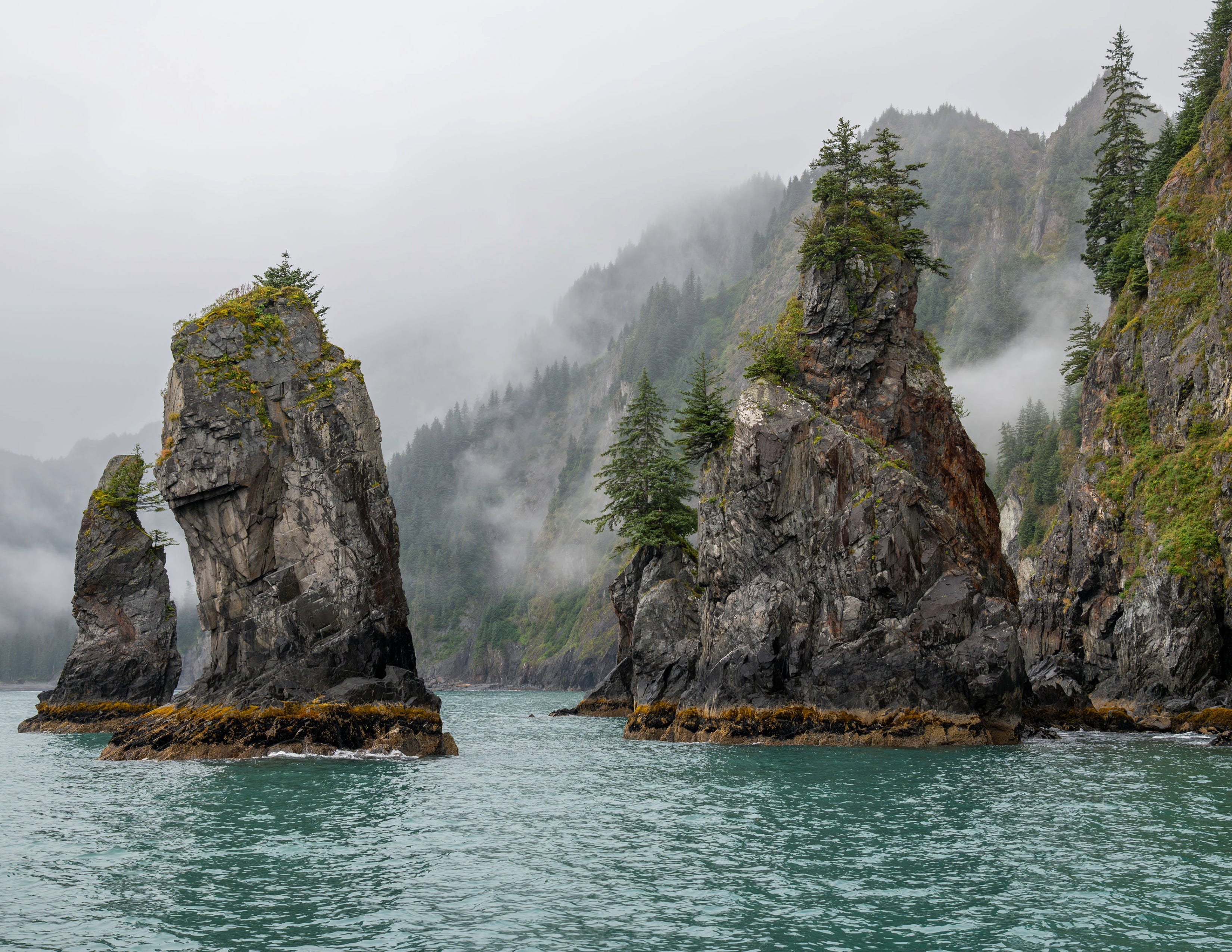
These sea stacks were formed by wave erosion on rocky headlands. Soft rock and fracture lines go first, leaving only the resistant cores standing. These towers were once part of the coastline, first eroding into caves in the sea cliffs, then becoming arches, before taking their current form as standing towers rising from the waters of Resurrection Bay. More on this area in my post: Late Summer: Aialik Glacier and Wildlife.
February
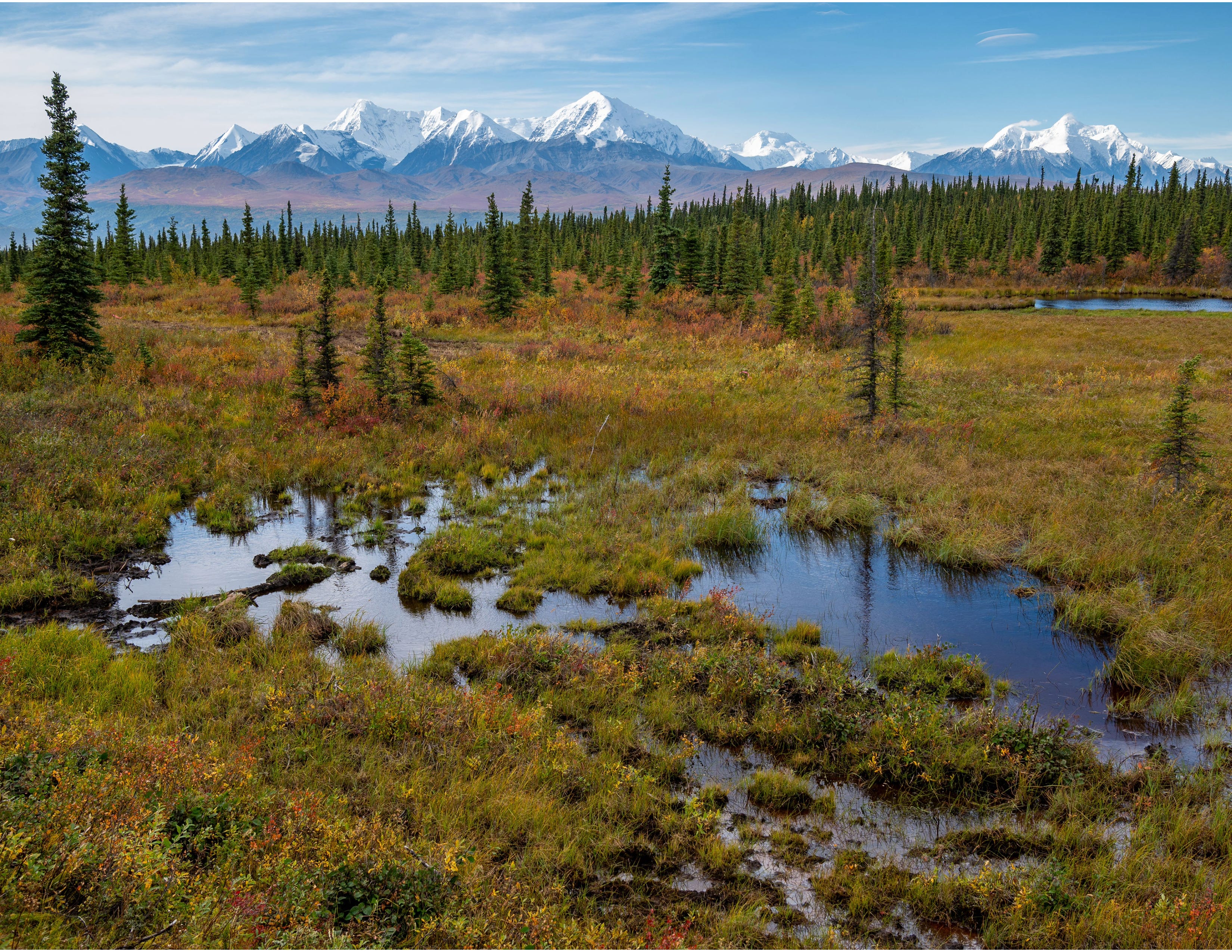
Kettle ponds and muskeg south of Delta Junction along the Richardson Highway. The ground holds water at the surface because permafrost or a dense hardpan lies beneath, causing rain and meltwater to pool rather than drain. The result is this quilt of small ponds and sphagnum. The color of the dwarf birch, blueberry, and willow understory is changing in early September before the leaves drop. Check out my write-up from this trip on my Canwell Glacier Caves post.
March
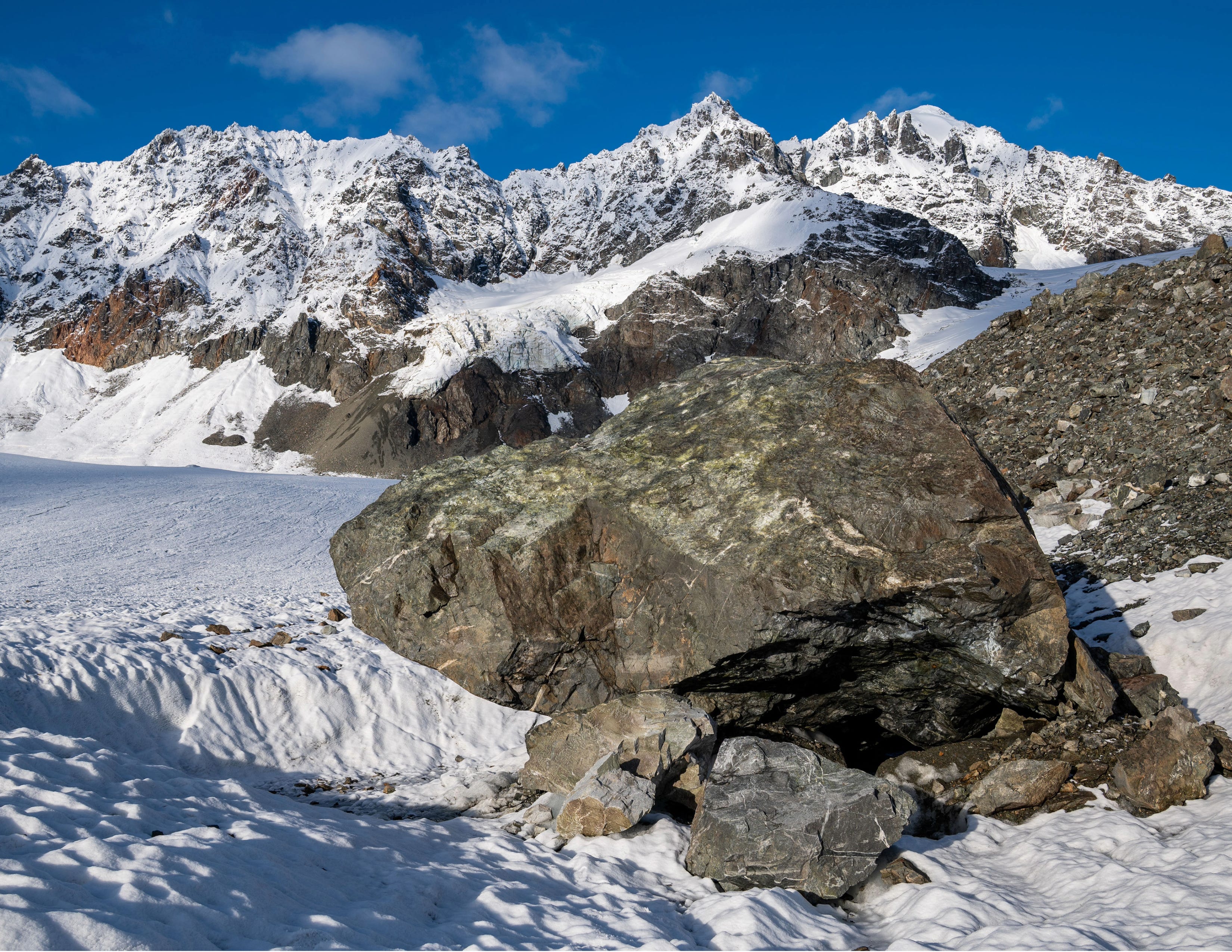
On the edge of a medial moraine on the College Glacier in the Alaska Range, large boulders are slowly transported downstream on top of the ice. Eventually, this boulder will rest on the ground, left behind as a glacial erratic in the College Creek Valley. Read more about this trip in my Field Notes: College Glacier Speedhike.
April
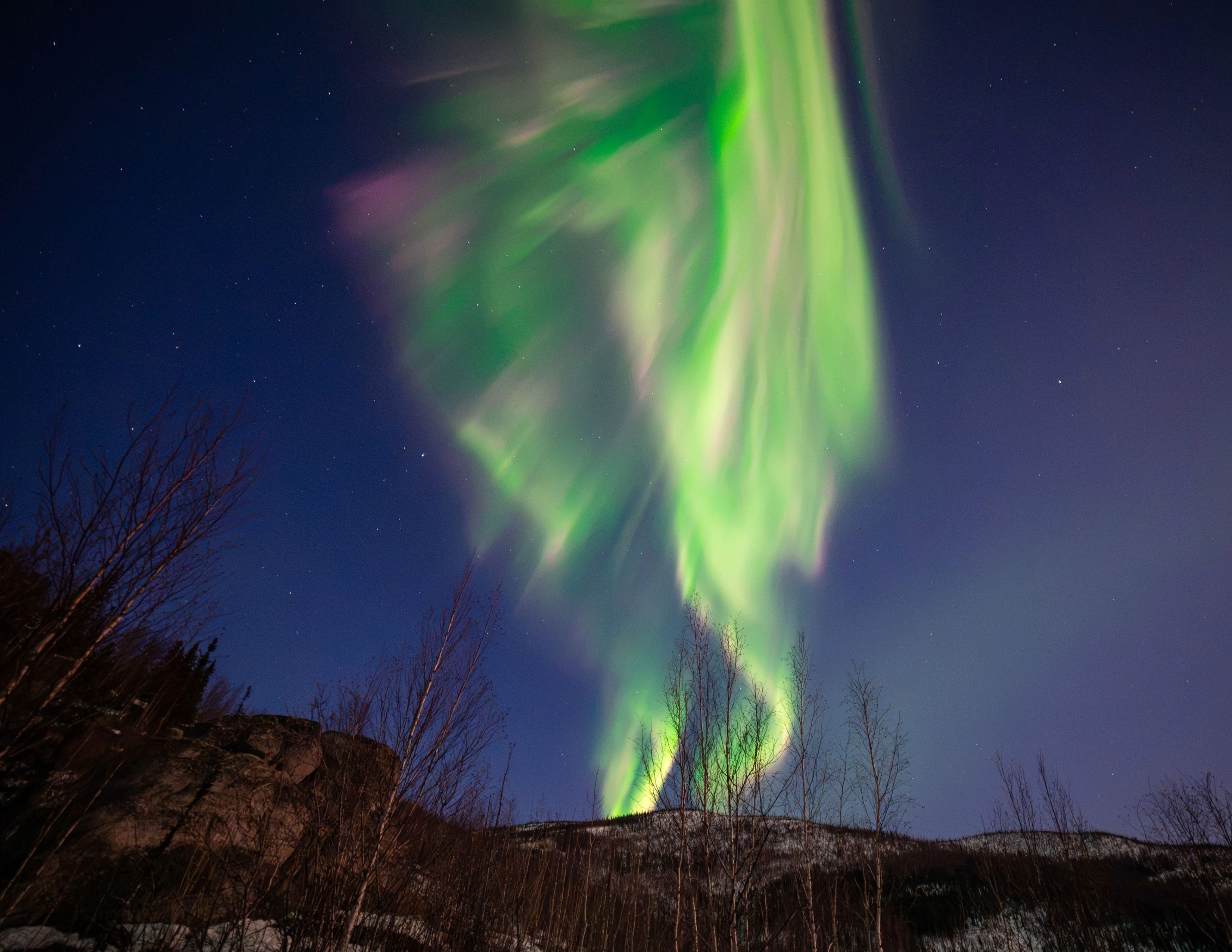
The green bands of aurora that light up our night sky in the winter come from the emission of light from atomic oxygen. These atoms are excited to higher energy levels when struck by high-energy electrons or protons from the solar wind, and when they lose that energy, they do so in discrete packets of energy in the form of light. During particularly intense geomagnetic storms, these collisions can occur more frequently at lower elevations, giving rise to the pink or crimson underside of these bands, produced by a combination of red and blue light from molecular nitrogen. Find much more detail on the colors of the aurora in my article: What causes the aurora.
On a more personal level, our winters here are hard, and the lack of sunlight can make them even more difficult. The aurora lighting up our nights goes a long way toward helping me get through it.
Some other related articles you may find interesting are “Viewing and Photographing the Northern Lights” and my hiking guide to Angel Rocks.
May
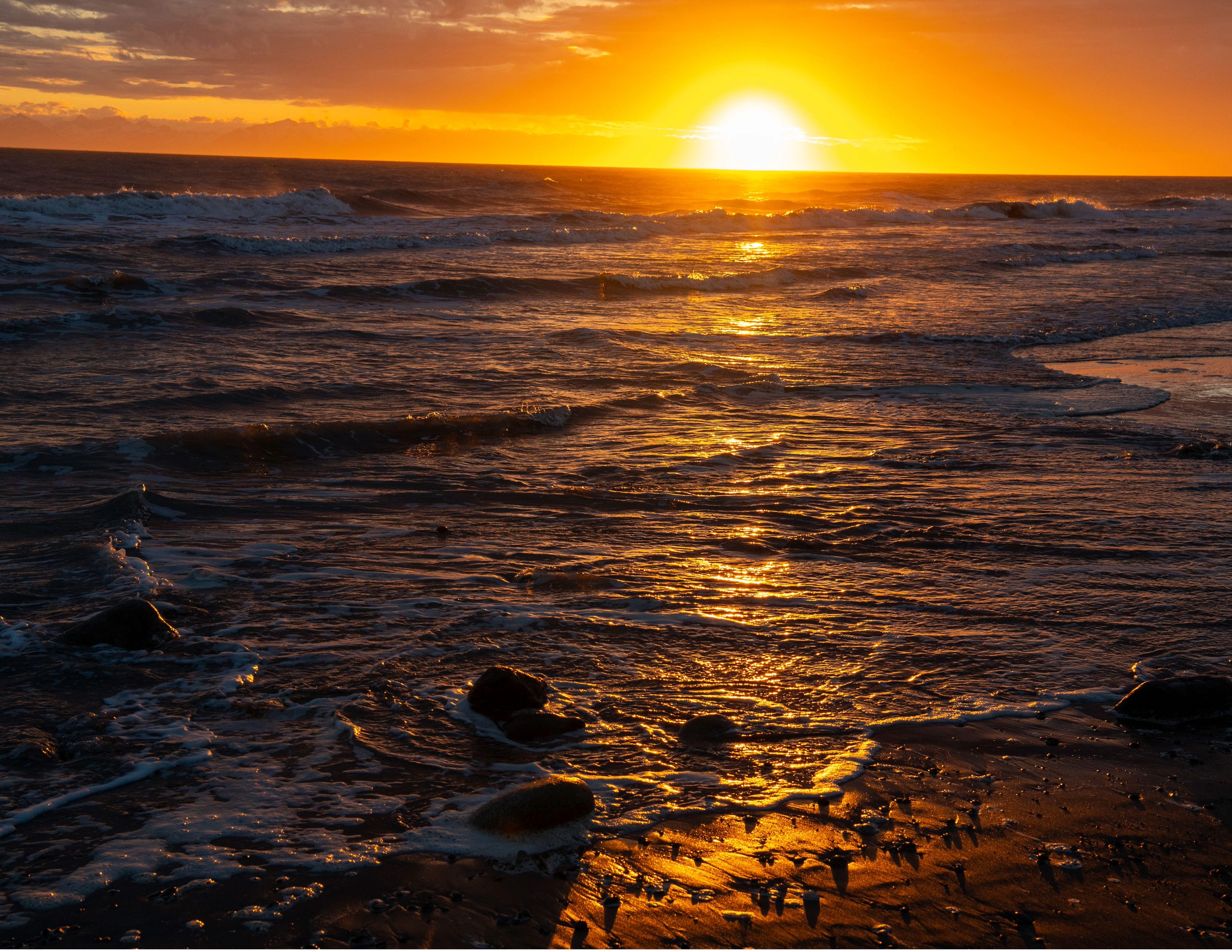
If you know me, you know I’m fascinated by light. It’s one of my biggest draws to photography, and one of my favorite topics in physics. Light from the sun, low on the horizon, passes through much more atmosphere than when the sun is overhead. While blue light is preferentially scattered, a process known as Rayleigh scattering that makes the sky blue, longer wavelengths like yellow, orange, and red are transmitted over long distances and reach your eyes late in the day. More photos from this trip in my post: Homer: sunsets, eagles, and flowers.
June
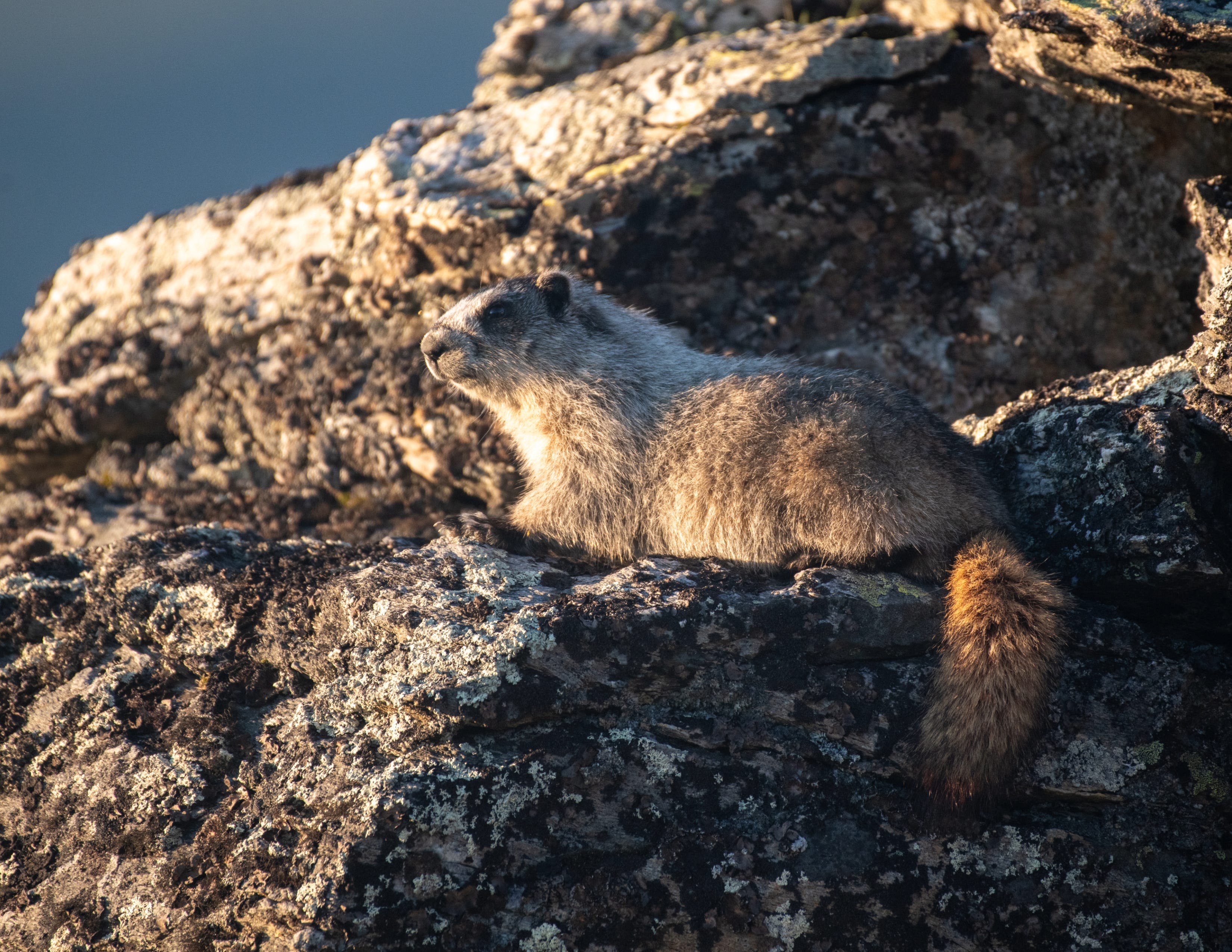
These alpine whistlers spend about seven to eight of the twelve months of the year underground. Hoary marmots are the largest members of the squirrel family (Sciuridae) in North America. When hibernating, they enter a state of torpor, with near-zero metabolic activity as their heart rate and body temperature drop to save energy. They’re also really fun to watch scurry about rocks and tors in the Alaska interior, where I find they are often very curious about what I am doing near their homes. I have a short post about this hike in my Field Notes, along with hiking info for Wickersham Dome.
July
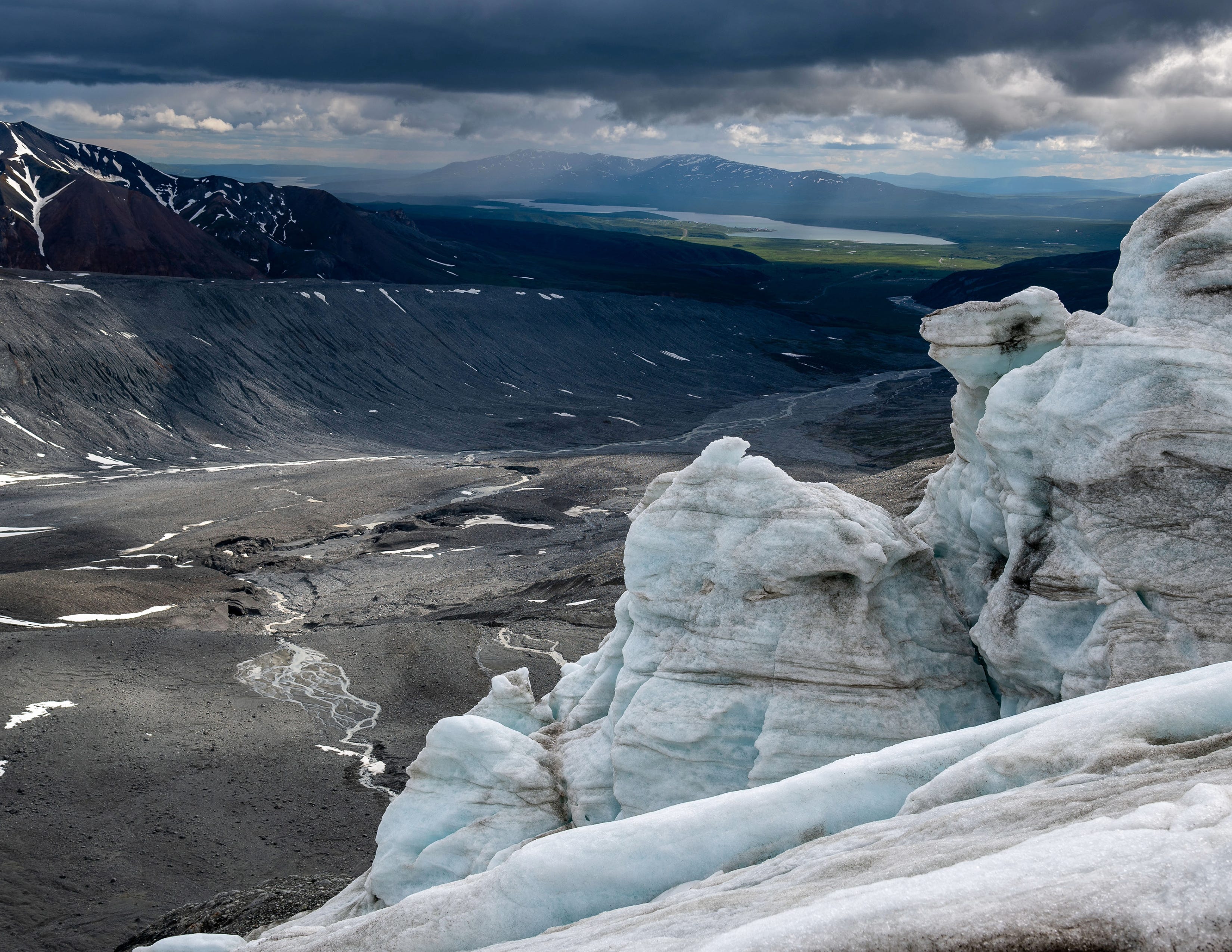
The Gulkana Glacier sits on the south side of the Alaska Range in a region locally known as the Deltas (due to the subrange's proximity to Delta Junction). In the photo above, the terminus of the main trunk of the Gulkana Glacier is also visible as a thin strip of ice. Not long ago, the Gabriel Icefall branch of the glacier connected to the main branch, but it is now completely disconnected as the glacier’s terminus has been quickly receding. I return to this area frequently, not only to explore the area, but also to document some of the changes I’ve been seeing in the ice. I’ve written more about this in a recent post: Gulkana Ice.
August
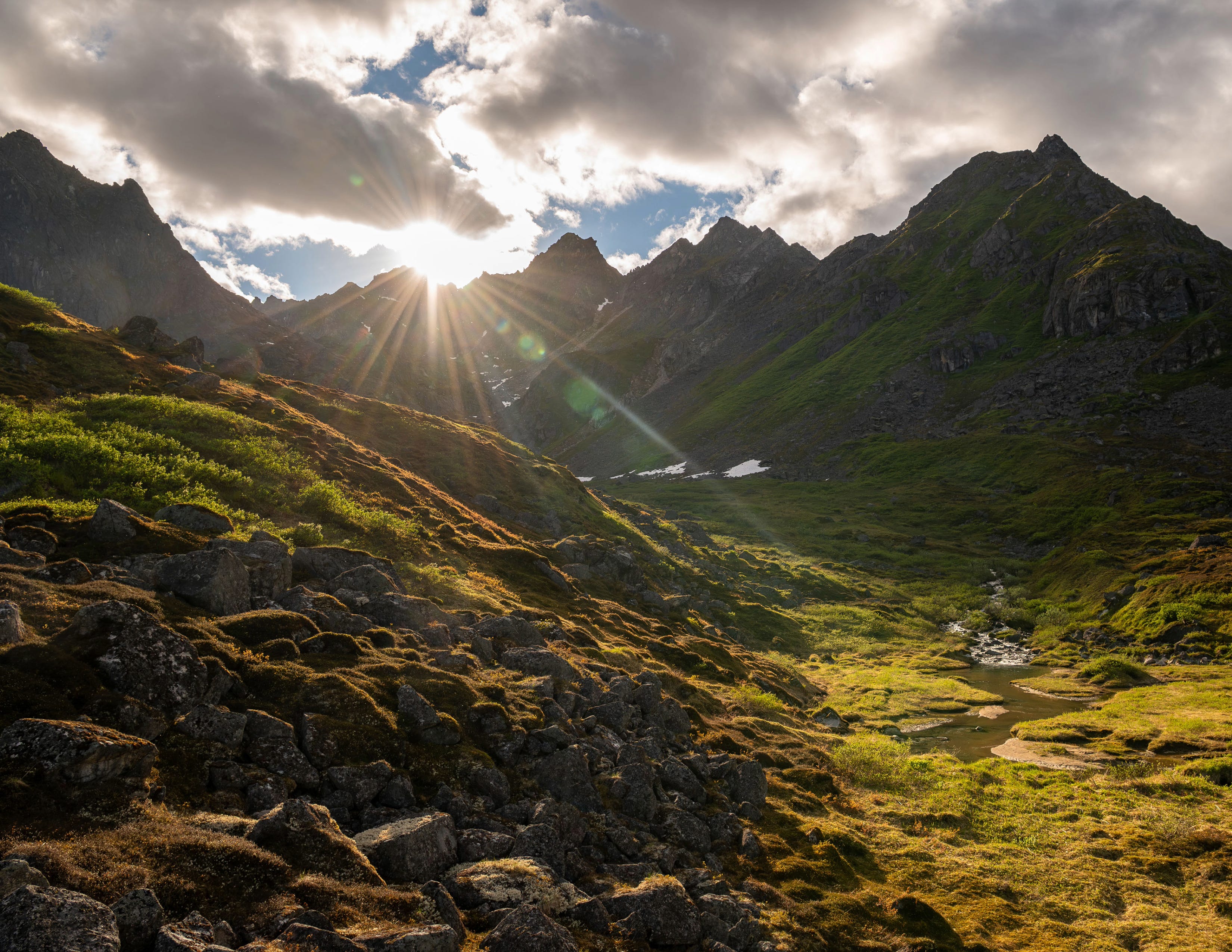
The Fairangel Valley in Archangel was formed by glaciers. Fairangel Creek is a tributary of Archangel Creek, after which the area is named. Hatcher is littered with large talus and boulders and has become a very popular spot for climbing and bouldering in recent years. This year was the first time I spent any time hiking instead of just bouldering here, and I’ve absolutely fallen in love with the place.
I have three posts written about this trip from this summer:
Day One in Hatcher Pass (this photo is from this post)
Getting steep (An impromptu off-trail hike over a pass in the area)
Just Going Along (Three hikes in one day - the first in Hatcher)
September
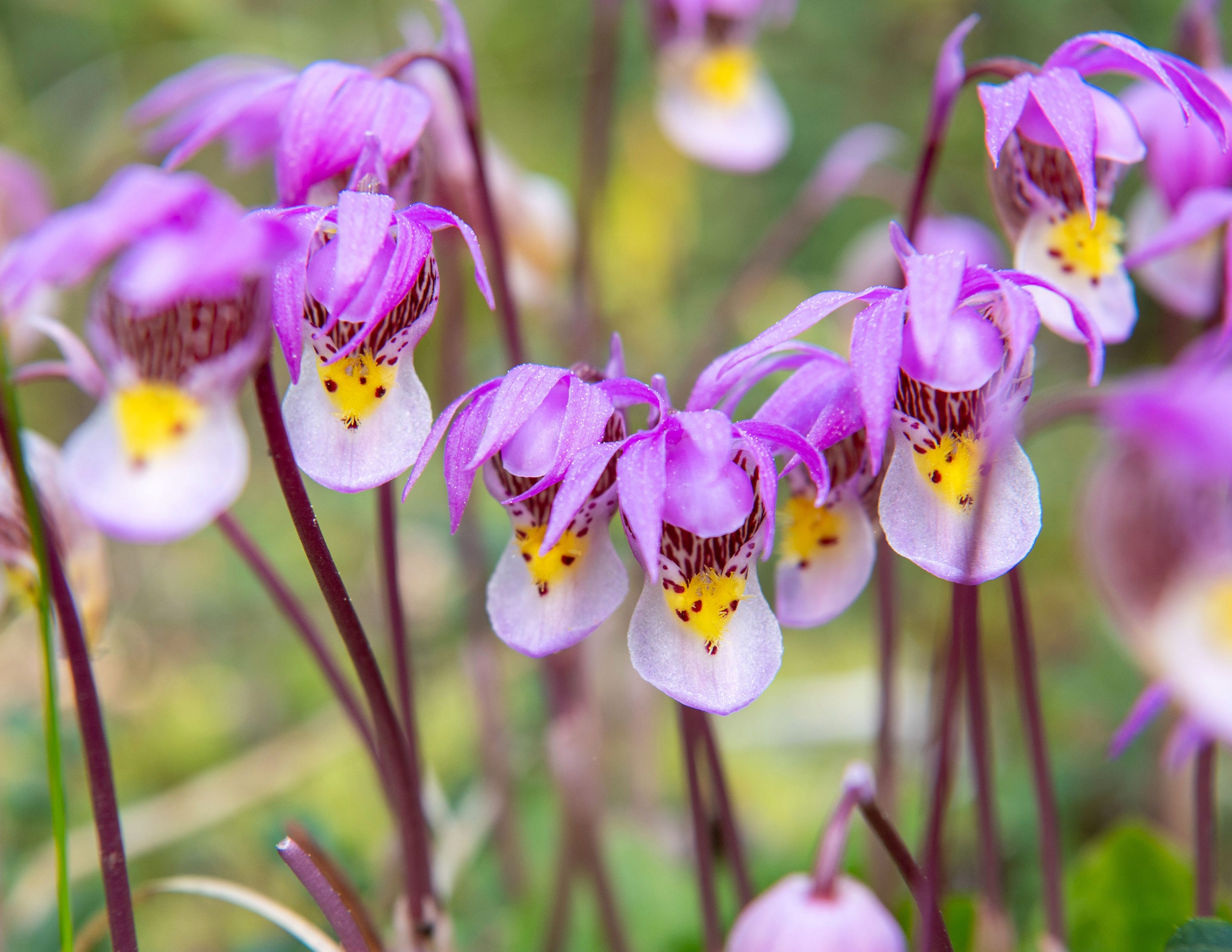
People always seem surprised when I tell them about orchids in Alaska. I guess orchids don’t conjure images of circumpolar climates for most. But we have approximately 33 species in the state. Eastern fairy slippers (Calypso bulbosa) are among the earliest-flowering species in the Alaska Interior and, arguably, one of the prettiest, easily marking our entry into spring. It has no nectar and dupes bumblebees into visiting with its yellow beard for pollination. It also depends on soil fungi to germinate, so it is only found where these certain mycorrhizal fungi exist.
I’ve been building my Alaska Wildflower Guide since 2020, and I continue to add new flowers every month to the guide. When my collection is a little more complete, I plan on publishing a printed field guide.
October
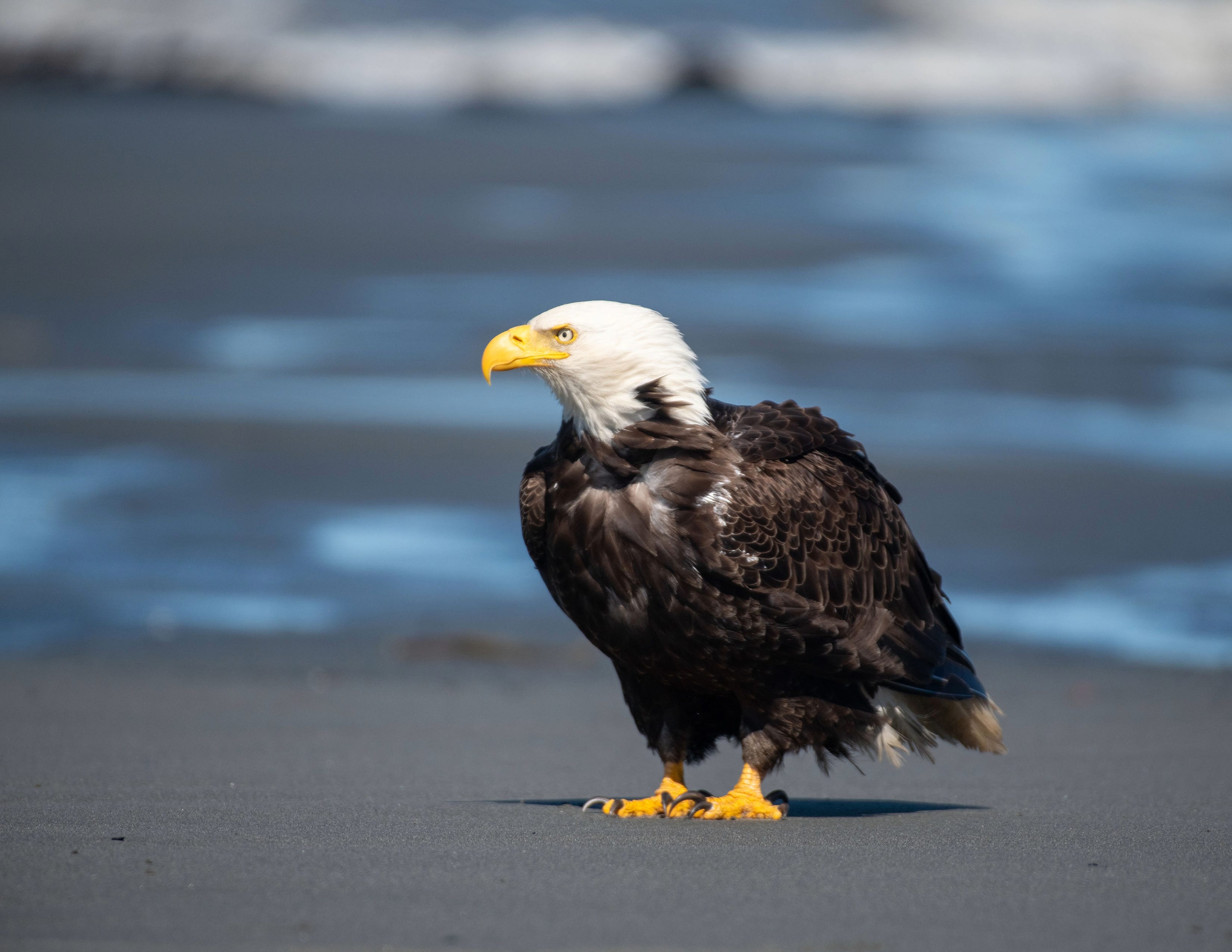
An adult bald eagle on the tideline of the Cook Inlet. Eagles gather along this coast as the tide recedes for easy meals. From my post Homer: sunsets, eagles, and flowers.
November
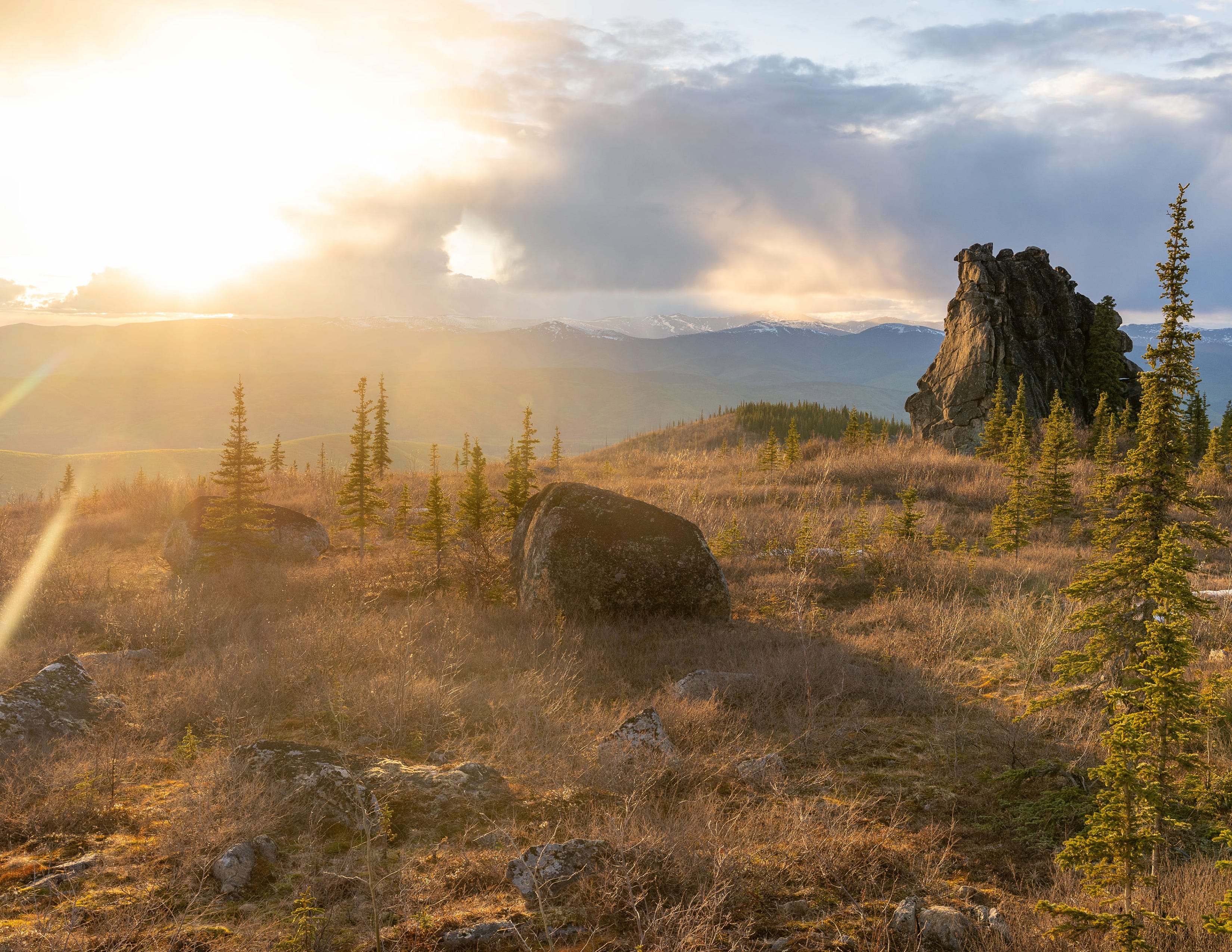
One of the massive tors along the Granite Tors Trail in the Chena River State Recreation Area outside of Fairbanks, Alaska. These tors are bedrock from granite plutons that remain standing as the softer rock around them weathers away. They’re left standing on many of the ridges in the Alaska Interior, evidence that this land has remained unglaciated, even in past ice ages. The photo is from a post Evening Light at the Granite Tors.
December
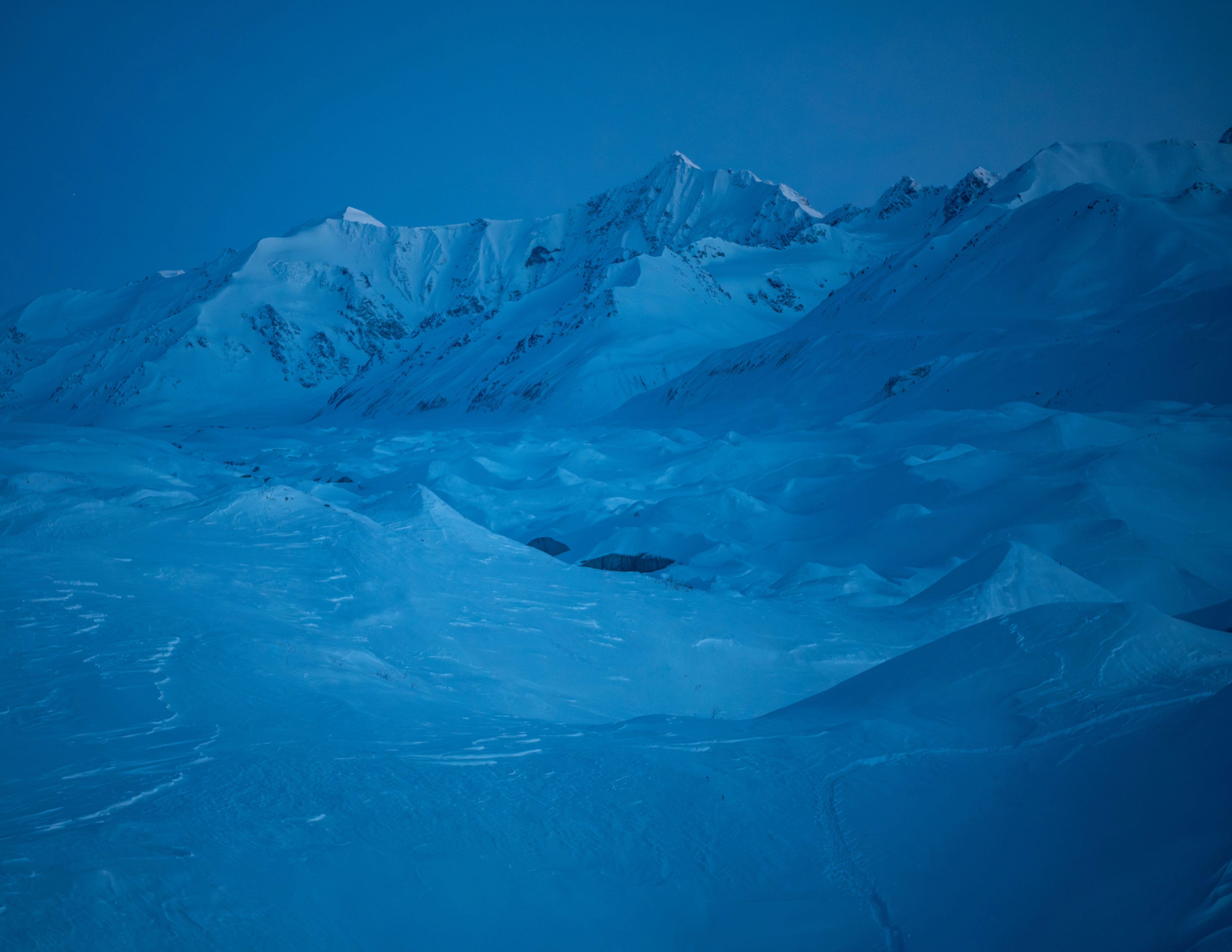
The long blue hour here in winter is another of my favorites. The sun is already below the horizon, and the only light left is skylight, which is blue due to atmospheric scattering. With no direct sunlight to compete with, the snowy landscape reflects the same blue. This was taken on the return trip from a visit to a glacier cave near the terminus of the Canwell Glacier. No cave photos in the calendar this year, but I’ve written about them extensively. Check out the post for this photo here: Blue Sky, Glacier Caves, and Ice Crystals.
Front Cover
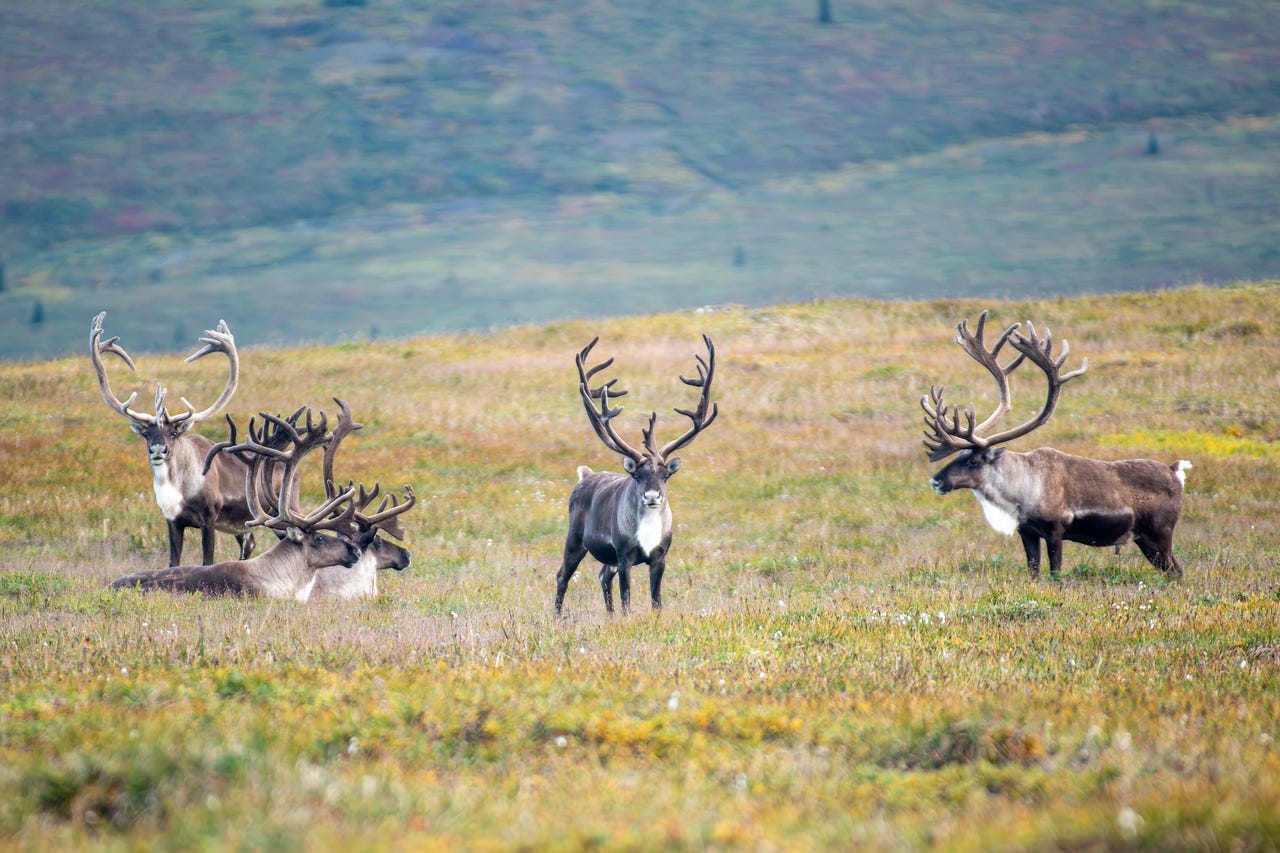
Barren-ground caribou, all bulls, in August velvet. All their antlers are still sheathed in the skin-and-blood covering just a few days or weeks before it’s shed, revealing the bone underneath. Caribou are the only deer species in which the females grow antlers too; however, their antlers are much smaller than the bulls'. More in my post: Evening on Mt. Margaret.
Back Cover
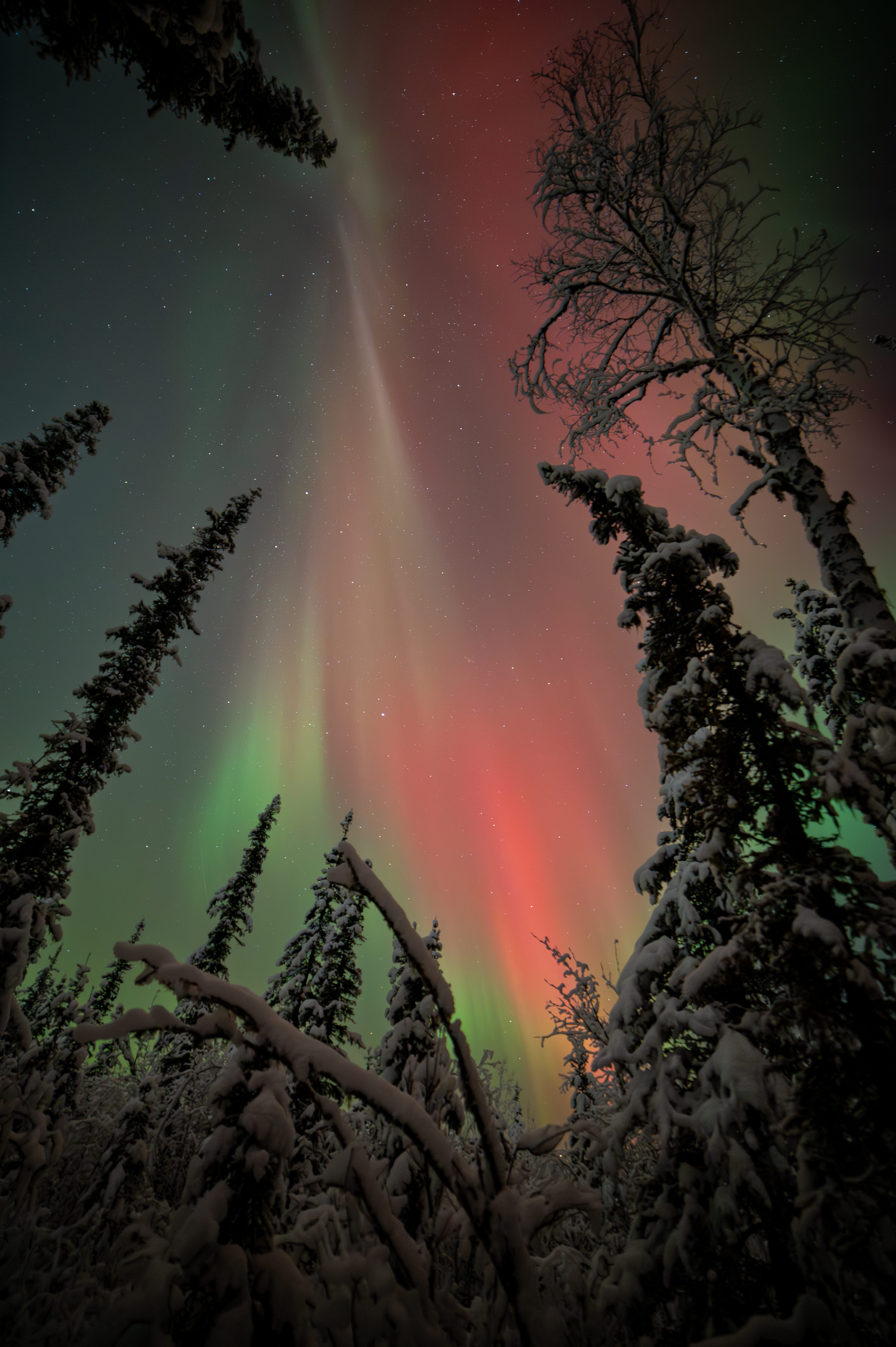
In my earlier aurora post, I mentioned the lower-altitude pink or crimson color of the aurora, often seen on the bottom border of the green bands during geomagnetic storms. This one’s showing high-altitude red emission from atomic oxygen. These are some of the highest colors we can see with the naked eye, occurring at about 200-300 km (120-180 miles) above the Earth’s surface.
That’s all fourteen images in the calendar. All the images are available as prints or wall art (direct links in the captions or in the calendar gallery here). If the writing is something you’d like to see more of, the field notes, wildflower guide, and the glacier documentation stay free because some readers choose to support it. A paid subscription is what keeps the rest of it open to everyone. Thank you for helping me share this place.

Great success to you Lee.